

Addressable advertising (also known as targeted advertising) has reshaped television and streaming audio, allowing advertisers to deliver more relevant messages to specific audiences while improving campaign performance and yield. Broadcast radio, however, has largely remained a one-to-many medium, with the same ad played to every listener.
This could now start to change.
With the growth of connected devices, particularly in-car systems, there is a growing possibility that broadcast radio could adopt elements of addressable advertising. This would combine the scale and resilience of broadcast with the targeting and measurement capabilities more commonly associated with digital platforms.
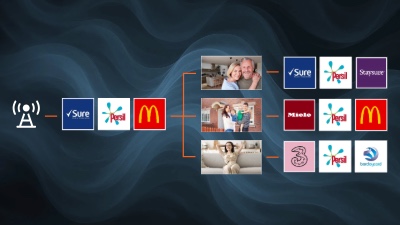
At its simplest, addressable advertising is the ability to deliver different ads to different listeners within the same ad break. In television, this is achieved through dynamic ad insertion, where broadcast ads are replaced in real time within the device.
A similar approach could be applied to broadcast radio. Instead of every listener hearing the same spot, connected receivers could detect an ad opportunity and insert a more relevant ad locally, creating a more personalised listening experience without disrupting the underlying broadcast service.
One of the key enablers is the connected car.
Modern vehicles increasingly include embedded connectivity, local storage, and sophisticated software platforms. These capabilities could allow radio services to combine broadcast delivery (DAB, FM or satellite) with IP-based features such as ad caching, targeting and reporting.
In addition, car manufacturers may hold information about vehicle owners, subject to appropriate consent, that could support audience segmentation. This opens up the possibility of tailoring advertising based on factors such as location, time of day or journey type.
Any addressable radio solution is likely to be hybrid by design.
Broadcast would remain the primary distribution mechanism, preserving reach and efficiency. Broadband connectivity could be used selectively to deliver ad assets, provide decisioning data, and enable reporting.
To support real-world usage, such a system would need to work even when connectivity is limited. Ads could be delivered to devices in advance and stored locally, with playback taking place offline and reporting sent later when a connection is available.
Technologies such as RDS, RadioDNS and specifications from organisations like DVB and World DAB may provide building blocks for signalling and interoperability, although a fully standardised approach for radio is still evolving.
If successfully implemented, addressable advertising in broadcast radio could create value across the ecosystem.
There are, however, important considerations.
Privacy and consent frameworks would need to be robust and transparent. Interoperability across devices, broadcasters and platforms would be essential to achieve scale. Operational complexity would increase, requiring coordination across multiple stakeholders. And critically, any solution would need to work reliably in environments with variable connectivity.
These challenges are not trivial, but many are similar to those already addressed in television and digital audio environments.
Addressable advertising in broadcast radio is not yet a reality, but it is an increasingly credible possibility. The combination of broadcast infrastructure, connected devices and evolving standards creates a foundation on which new commercial models could be built.
For organisations across the radio and automotive ecosystem, now may be the right time to explore what this could mean in practice.
If you are interested in discussing how addressable advertising could be applied to broadcast radio, or exploring potential approaches, contact BCi Digital to start the conversation.

Contact us to discover how our expertise in real-time systems, media distribution, and addressable advertising can help you build innovative, scalable solutions that drive real results.