

How combining the scale of TV return path data with representative audience panels can improve measurement accuracy, unlock new commercial opportunities and control data collection costs.
Connected televisions are creating new opportunities for broadcasters to understand how audiences watch their services. Through technologies such as HbbTV, broadcasters can collect detailed information about viewing behaviour from potentially millions of devices, providing a level of scale and granularity that traditional audience measurement panels cannot achieve on their own. This return path data (RPD) has the potential to transform television audience measurement, particularly as viewing becomes increasingly fragmented across channels, platforms and services.
However, collecting information from a million televisions is not the same as measuring a million television audiences. Return path data records what a device is doing, not necessarily who is watching. Furthermore, the devices providing data are unlikely to represent the viewing population as a whole. The opportunity lies in combining the scale of return path data with the demographic and behavioural insights provided by traditional audience measurement. By applying statistical modelling, data fusion and carefully managed sampling, broadcasters and measurement organisations can turn device usage into reliable audience estimates. The challenge is to achieve this efficiently, generating the data needed for trusted measurement without collecting and processing unnecessarily large volumes of information.
Return path data is information reported by television receiving devices (e.g. Smart TVs, set-top boxes) about their usage. Depending on the technology and implementation, it can include the channel being watched, when viewing started and ended, and how long a particular service was viewed.
One of the most significant technologies enabling return path data collection is HbbTV, the open standard used to deliver interactive television services across broadcast and broadband networks. HbbTV applications can run on compatible connected televisions and use their broadband connection to report viewing information to a broadcaster or measurement provider. This gives broadcasters the opportunity to collect usage data directly from compatible devices rather than depending exclusively on information supplied by platform operators.
Other sources of return path data include pay-TV set-top boxes, operator-managed devices and proprietary connected TV platforms. These can provide similar information, although access to the data and the terms under which it can be used vary between platforms.
HbbTV offers particular advantages because it is an open, standards-based technology deployed across many European television markets. However, the number of HbbTV-capable televisions in a market is not necessarily the number that can contribute to an audience measurement system. Some televisions are not connected to broadband, while others may be connected through cable or set-top box environments that prevent the necessary HbbTV applications from running. In some cable networks, the broadcast application signalling required to launch HbbTV applications is removed or modified. Device implementations may also differ in their capabilities and reliability. Consent requirements can further affect the number of households contributing information. Consequently, the available return path dataset is a potentially very large, but incomplete, representation of television usage. Understanding and managing these gaps is a fundamental part of turning the data into meaningful audience measurement.
Television advertising has traditionally been bought and sold using audience measurements established through representative panels. In many markets, measurement is overseen by a Joint Industry Committee (JIC), bringing together stakeholders such as broadcasters, advertisers and advertising agencies to establish an independent and trusted measurement currency. A representative panel is recruited to reflect the composition of the television viewing population, taking account of characteristics such as geography, age, gender and household composition. Measurement equipment records which television services are being watched, while household members identify themselves when viewing. This enables the measurement system to attribute viewing to individuals, including occasions when several people watch the same television together.
Modern equipment listens to what people are watching and detects audio watermarks inserted into the video content. The resulting information is weighted and projected to represent the wider population.This is particularly important for television advertising, where inventory is frequently traded against demographic audiences rather than simply the total number of households watching. For example, advertisers may wish to reach Adults 16–34, ABC1 Adults or Men 25–34. Audience measurement enables broadcasters and sales houses to estimate how many people within those groups are watching individual programmes and advertising spots. The difficulty is that television viewing has become increasingly fragmented. Audiences are distributed across a growing range of broadcast channels, streaming services and other forms of video entertainment. At the same time, advertisers are seeking greater precision in targeting particular audience segments.
As the measured audience becomes smaller, fewer members of a representative panel are likely to be watching a particular service or advertisement. This increases the statistical uncertainty of the resulting estimates.
Consider a simplified example of a television audience panel containing 5,000 individuals representing a population of 30 million.
On average, each panel member represents 6,000 people in the wider population. Suppose an advertising spot is watched by 12,000 people. Under a simplified random-sampling model, only two panel members would be expected to have watched it. The actual number could be higher or lower. There is approximately a 14% probability that none of the panel members watched the advertisement. In that situation, the advertising spot could receive a reported audience of zero, despite having been watched by thousands of people.
The problem becomes even more pronounced when measuring specific audience segments rather than the total viewing population. For example, adults aged 16–34 typically represent around 24% of the population. Assuming the advertising spot's audience has a similar demographic composition, the expected number of panel members aged 16–34 watching the advertisement would fall to just 0.48. This increases the probability of a zero-rated spot to approximately 62%, even though around 2,880 people within the target demographic have actually seen the advertisement.
In practice, audience measurement systems use more sophisticated weighting and statistical methodologies, but the underlying challenge remains. These zero-rated spots are particularly problematic for smaller broadcasters and niche channels, where limited panel representation can lead to substantial variation in reported audiences. They can also affect broadcasters' ability to demonstrate the value of their advertising inventory.
As audience segments become more granular, the problem extends beyond smaller channels to particular demographics and increasingly targeted advertising propositions. Return path data offers an opportunity to address these limitations by bringing a much larger volume of observed viewing behaviour into the measurement process.
At first glance, collecting viewing information from hundreds of thousands or millions of televisions might appear to solve the sample-size problem.
However, there are two fundamental challenges. The first is that the reporting devices are not necessarily representative of the television viewing population. Connected households may have different demographic characteristics from households without broadband connectivity. The mix of device manufacturers, television models and reception platforms can also vary significantly between different parts of the population. Consequently, simply aggregating viewing information from all available devices could introduce systematic bias.
The second challenge is that return path data measures devices rather than people. A television may be watched by one person, several people or different household members at different times of day. A device reporting that a particular channel was watched cannot independently determine whether the viewers were children, adults or a family watching together. A return path dataset also does not necessarily identify the number of individuals within a household or their demographic characteristics. This distinction is crucial because television advertising is generally valued according to the audiences reached, not the number of devices receiving the advertisements.
Converting device usage into audience measurement therefore requires two transformations: ensuring that the observations adequately represent the viewing population, and estimating which individuals were watching. Both challenges can be addressed by combining return path information with additional research and measurement data.
Representative panels and return path datasets provide complementary information. Panels offer detailed knowledge about households and the individuals within them, including their demographic characteristics and viewing behaviour. They also record shared viewing, enabling audience measurement to distinguish between a television being used and the number of people watching it. Return path data provides much greater scale, potentially capturing viewing behaviour from hundreds of thousands or millions of devices.
The objective of combining these datasets is to bring their strengths together, using the depth of panel information and the scale of device observations to generate more robust audience estimates.
There are different statistical approaches to achieving this. Two important methods are aggregation, where return path observations are combined and calibrated to produce audience estimates, and behavioural twinning, where return path households are matched to representative panel households to create an expanded synthetic audience panel. Both approaches can improve the measurement of smaller audiences and advertising spots, but they differ in how the data is processed and how individual viewing is estimated.
While established audience measurement panels provide a valuable foundation for combining datasets, they are not the only source of demographic and behavioural information. In markets without an established Joint Industry Committee (JIC) measurement system, establishment surveys and appropriately sourced first-party data can provide complementary information to support audience modelling. However, independent validation remains essential to ensure that the resulting audience estimates are sufficiently representative and reliable for commercial use.
An aggregation-based approach uses viewing information collected from a large population of devices to establish how television usage varies across channels, programmes and time periods. These observations can be aggregated to provide detailed estimates of device viewing. However, the resulting data still needs to be transformed into representative measurements of individual audiences. One approach is to use information from the established audience panel to derive statistical adjustments that account for the characteristics of the reporting population, household composition and co-viewing.
For example, a measurement system might use the panel to establish the relationship between device usage and individual audiences for particular channels, times of day or demographic groups. These relationships can then be applied to the larger return path dataset to estimate the audience watching a particular programme or advertising spot. Additional weighting and calibration can compensate for differences between the reporting devices and the wider television population. The result is a set of statistically modelled audience estimates derived from large-scale device observations, without necessarily creating synthetic individuals or households.
This approach can be particularly useful when the principal objective is to improve the stability and granularity of established audience measurement outputs, such as programme ratings, demographic impacts and advertising spot audiences. Its effectiveness depends on the quality of the input data, the accuracy of the statistical adjustments and the ability to validate the resulting estimates against representative research.
An alternative approach is behavioural twinning, which uses similarities in viewing behaviour to identify households within the return path dataset that closely match households in a representative audience measurement panel.
The process begins by analysing viewing patterns within the two datasets. This might include which channels are watched, at what times of day, how frequently particular services are selected and the duration of viewing sessions. Using these characteristics, the system identifies return path data (RPD) households whose viewing behaviour closely resembles that of households in the representative panel. These matched RPD households are used to expand the measurement panel, with synthetic household members created using demographic and individual viewing information derived from their corresponding panel households.
For example, an RPD household might be matched to a panel household containing two adults and two children. The resulting synthetic household would be assigned corresponding modelled members, with viewing sessions statistically attributed to those individuals, including occasions when several household members are likely to be watching together.
The result is an expanded synthetic audience panel that combines the scale of return path observations with the individual-level information provided by representative panel measurement. Unlike an aggregation approach that produces audience estimates directly, behavioural twinning creates modelled individual viewing histories. These can support additional forms of analysis, such as estimating unique reach, viewing frequency and audience overlap across programmes or advertising campaigns.
Importantly, synthetic individuals are statistical representations rather than directly identified viewers. The reliability of the resulting measurement depends on the quality of the behavioural matches, the representativeness of the original panel and the effectiveness of the modelling. Both aggregation and behavioural twinning can provide more stable audience estimates than a traditional panel alone. The choice between them depends on the available datasets, the requirements of the measurement system and the audience metrics that need to be produced.
The optimal reporting population will depend on the audience measurement methodology being used.
For behavioural twinning, this may involve selecting return path households whose viewing behaviour provides suitable matches to households in the representative panel, improving the scale and composition of the expanded synthetic panel.
For aggregation-based measurement, the focus may instead be on ensuring sufficient observations across the channels, time periods, geographic areas and audience categories needed to produce reliable estimates. Statistical sampling and weighting can then be used to manage differences between the reporting population and the wider television audience.
In both cases, the objective is to collect enough information to support reliable measurement without unnecessarily increasing the volume of data being collected and processed. This creates an opportunity to move beyond the approach of collecting information continuously from every available device and subsequently discarding data that is not required. Instead, the population of reporting devices can be managed dynamically, selecting devices according to the requirements of the measurement system and adjusting that selection as those requirements evolve.
This is a key principle behind BCi Digital's approach to return path audience measurement: optimise the population of reporting devices to meet the needs of the measurement methodology, rather than simply maximise the volume of data collected. Dynamic reporting can reduce communication, processing and storage costs while providing the flexibility to adapt the dataset as measurement requirements change.
Audience measurement panels are not static. Households join and leave, demographic characteristics change, and measurement organisations periodically adjust panel composition to maintain representativeness. These changes can occur relatively frequently, potentially requiring monthly recalibration of the associated models.
For aggregation-based measurement, changes to the representative panel may require adjustments to the statistical factors used to convert device viewing into individual audience estimates. For behavioural twinning, they may require reassessing household matches and updating the composition of the expanded synthetic panel. Changes in viewing behaviour, device coverage and the composition of the reporting population can also affect measurement quality.
In either case, the measurement system must be capable of adapting to these changes while maintaining consistent, reliable audience estimates. This creates a further advantage for dynamically controlled return path reporting. Rather than maintaining a fixed reporting population or continuously collecting information from every available device, the system can adjust the selection of reporting households to meet changing measurement requirements.
Independent validation remains essential, ensuring that the combination of device observations, statistical modelling and representative research continues to produce trustworthy results.
Hybrid measurement approaches combining traditional panels with HbbTV return path data are already being deployed or developed in several European markets. Austria and Germany provide two particularly interesting examples of how the industry is approaching the opportunity.
Austria introduced TELETEST 2.0 in September 2024, combining its established television audience measurement panel with return path information from more than 1.1 million internet-connected HbbTV devices.
The system is operated on behalf of the Arbeitsgemeinschaft TELETEST (AGTT), with GfK Austria responsible for panel measurement and data integration, and TV-Insight providing HbbTV measurement and associated statistical processing.
As of January 2026, the representative panel comprised approximately 1,505 television households and 3,295 individuals aged three and over. The addition of HbbTV data has enabled the system to produce more stable estimates for smaller audiences, addressing one of the longstanding problems of panel-only measurement.
AGTT has highlighted the reduction of zero-rated audiences and fluctuations affecting smaller channels and audience segments as important benefits of the approach. The availability of more timely measurement also creates opportunities beyond traditional reporting. Austria's TV-LOAD initiative uses information from TELETEST 2.0 to support the optimisation of television advertising breaks.
Austria demonstrates how large-scale return path observations can complement an established audience measurement currency, improving the granularity and stability of commercially important audience information.
Germany is taking a similarly ambitious approach through AGF Videoforschung, the organisation responsible for the country's television and video audience measurement.
In September 2026, AGF announced a substantial upgrade to its measurement architecture, with the integration of HbbTV return path data forming one of five interconnected development areas. AGF is already modelling viewing information based on more than 1.7 million measured devices, with its target architecture expected to encompass approximately 3.4 million devices.
The representative AGF panel will remain the foundation and modelling benchmark, with the additional device data intended to improve the stability of measurement for fragmented viewing, smaller services and narrow audience segments. The wider programme also includes a virtual panel of approximately 800,000 synthetic cases, designed to support the integration of viewing across linear television, streaming and other connected TV usage.
AGF is targeting implementation of its updated measurement architecture from 2028. The German initiative highlights the industry's recognition that neither traditional panels nor large-scale device observations can provide a complete solution independently. It also demonstrates how synthetic audience modelling is becoming an increasingly important component of future measurement systems.
While improving traditional audience measurement is a compelling initial application, the same return path infrastructure can support additional commercial opportunities.
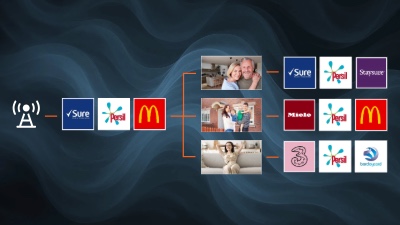
Addressable advertising is one important example. As broadcasters introduce advertising tailored to individual households, they need to understand not only whether an advertisement was delivered but also the audience it reached. Combining return path data with demographic models can help support audience estimates for addressable campaigns and enable them to be assessed alongside traditional television advertising.
The same underlying data can support attribution studies, linking television viewing and advertising exposure to other research or outcome datasets, where appropriate permissions and methodologies are in place.
More timely usage information can also support advertising optimisation, including the selection and scheduling of advertisements in response to changing viewing patterns.
These applications increase the potential value of return path measurement, but also reinforce the importance of managing data collection efficiently and ensuring that the resulting information can be trusted.
As television distribution continues its transition towards IP delivery, the quantity of available usage data will inevitably increase.
However, an all-IP television environment will not automatically resolve the fundamental challenges of audience measurement. Connected devices will still report activity rather than directly identify everyone watching. Households will continue to share screens, while the availability of device data will depend on differences in platforms, permissions and technical implementations.
Even where advertising is bought and sold using digital-style metrics such as cost per thousand impressions (CPM), advertisers will continue to value independent verification of audience reach, demographic composition and campaign performance. Representative research will therefore remain important, alongside increasingly sophisticated methods for incorporating large-scale device observations. The future lies not in replacing audience panels with return path data, but in combining their complementary strengths.
Equally, the success of these systems will depend on collecting the right information rather than simply collecting the most information. Dynamic control of reporting devices can allow measurement populations to evolve alongside representative panels, maintain appropriate coverage of audience segments and reduce unnecessary collection and processing costs.
At BCi Digital, we are applying these principles through Orion, our audience measurement solution, which supports the selective reporting of television usage data from connected devices. By enabling the reporting population to be dynamically controlled and adapted to the requirements of different audience measurement methodologies, Orion provides a scalable, cost-efficient foundation for integrating return path data into audience measurement systems.
If you are exploring how return path data could enhance your audience measurement capabilities, contact BCi Digital to discuss how our technology and expertise can help turn television usage data into commercially valuable audience insight.

Contact us to discover how our expertise in real-time systems, media distribution, and addressable advertising can help you build innovative, scalable solutions that drive real results.